WIPE IT DOWN
After wearing your watch, use a clean, soft microfibre cloth to gently remove fingerprints, oils, dust and moisture from the case, crystal and bracelet.


MATAI WATCH GUIDE
Your MATAI is designed to be worn, but how you care for it matters.
From everyday cleaning and water exposure to storage, batteries and servicing, a few simple habits can help protect the appearance and performance of your watch for years to come.
Different watches and materials can require different levels of care, so always consider the construction and water-resistance rating of your individual MATAI.
This guide covers the essentials for cleaning, wearing, storing and caring for your MATAI watch.
02
Your MATAI is made to be worn. A few simple habits can help keep it looking and performing at its best.
After wearing your watch, use a clean, soft microfibre cloth to gently remove fingerprints, oils, dust and moisture from the case, crystal and bracelet.
If your watch is exposed to sweat or moisture, gently wipe it down and allow it to dry naturally. Always follow the water-resistance rating of your individual watch.
Keep your watch away from perfumes, cleaning products, solvents and other harsh chemicals that may affect its finish, seals or natural materials.
Avoid unnecessary knocks, drops and contact with hard surfaces. When you're not wearing your MATAI, store it somewhere clean, dry and protected.
A LITTLE REGULAR CARE GOES A LONG WAY.
Regular light cleaning can help remove the oils, dust and moisture that naturally build up through everyday wear. Always clean your watch gently and consider the materials used in your individual MATAI.

Use a clean, soft microfibre cloth to gently wipe the case and crystal. This will remove most fingerprints, oils and everyday marks.
Avoid abrasive cloths, polishing compounds or harsh cleaning products that may scratch the crystal or affect the finish of the case.

Gently wipe between bracelet links and around the clasp where dust, oils and moisture can collect.
Use extra care around mixed-material bracelets and decorative finishes. Avoid soaking the bracelet unless you know the construction and water-resistance of your specific watch allows it.

Some MATAI watches feature natural wood detailing. Wood should be treated differently from a fully metal bracelet.
Avoid prolonged exposure to water, cleaning chemicals, perfumes and excessive moisture. Use a soft dry cloth for regular cleaning and allow any moisture to dry naturally.
04
Avoid heavy knocks, drops and unnecessary impacts. Strong shocks can damage the crystal, case, bracelet or components inside the watch.
Strong magnetic fields can affect the accuracy and operation of some watch movements. Avoid prolonged close contact with powerful magnets and magnetic equipment.
Avoid prolonged exposure to extreme heat or cold, steam and sudden temperature changes. High temperatures and steam can also affect seals and other watch components.
Avoid direct contact with perfumes, solvents, cleaning products and other harsh chemicals. Where possible, apply fragrances and personal-care products before putting on your watch.
PROTECT THE WATCH. PRESERVE THE STORY.
How you store your watch when it isn't being worn can be just as important as how you care for it on your wrist.
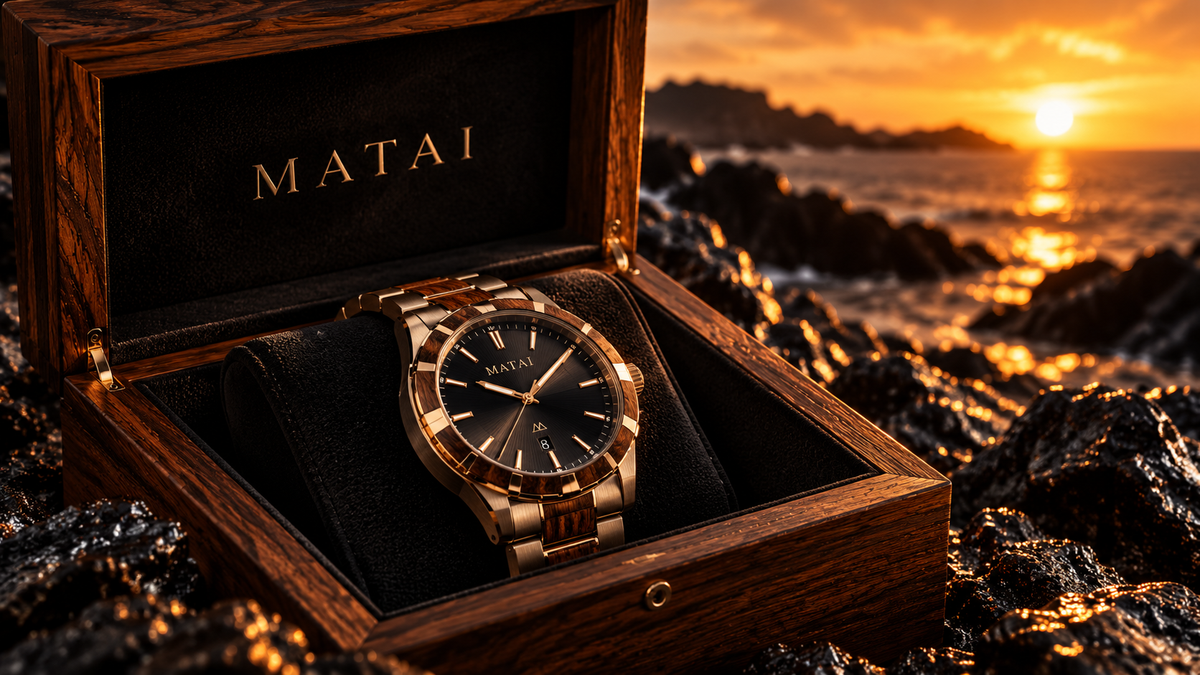
If your quartz watch stops because the battery has reached the end of its life, arrange for the battery to be professionally replaced. Avoid leaving an exhausted battery inside the watch indefinitely.
It's normal for an automatic watch to stop after being left unworn for long enough. When you're ready to wear it again, wind and reset the watch according to the instructions for your model.
Your chronograph can be stored like a normal watch. There is generally no need to leave the chronograph timing function running continuously when it isn't being used.
LOOK AFTER IT TODAY. CARRY IT FOR YEARS TO COME.
06
Watches contain small mechanical and electronic components that may eventually require professional attention. Contact MATAI if you notice unusual timekeeping, condensation beneath the crystal, problems with the crown or pushers, a chronograph that isn't operating correctly, or a watch that repeatedly stops despite normal use.
Quartz watch batteries should be professionally replaced. Correct battery replacement helps reduce the risk of damage to the movement, case and seals.
If your watch isn't operating normally, contact MATAI before attempting repairs yourself. Some issues require specialist watchmaking tools and experience.
If moisture or condensation appears beneath the crystal, stop exposing the watch to water and contact MATAI for assistance as soon as practical.
Opening the case without the correct tools or experience can damage the watch, movement or case and may compromise its seals.
If you're unsure about cleaning, operation, servicing or the condition of your watch, we're here to help.
CONTACT MATAI